Off-road driving comes with its share of risk: loss of traction, momentum stalls, or unexpected terrain changes. Recovery gear is essential for managing these situations, especially if you’re travelling without support or in remote areas. So, what do you take with you?

Essential 4×4 Recovery Tools
1. Tyre Deflator, Compressor and Pressure Gauge
Before any recovery attempt, adjusting tyre pressure is often the most effective and immediate solution. Lowering your tyre pressure increases the contact patch, improving grip in sand, mud or snow. A deflator allows for controlled, consistent pressure drops, while a compressor ensures you can reinflate tyres to safe road-going pressures when needed. Always pair this with a reliable pressure gauge.
2. Recovery Tracks
Often the first tool deployed in soft terrain, recovery tracks provide immediate traction under slipping tyres. They’re lightweight, easy to position, and useful in a wide range of conditions. Brands like Maxtrax or TRED are common in South Africa and can double as ramps or even basic shovels.

3. Snatch Strap
A snatch strap connects a bogged vehicle to a recovery vehicle. It stretches under tension, building kinetic energy that helps pull the stuck vehicle free. They are quick to use but require rated recovery points on both vehicles and should never be attached to tow balls or bumpers.
Related: Tested and explained: Traction control, low range and diff-locks
4. Shackles (Soft or Bow)
Shackles link recovery straps or ropes to your vehicle’s recovery points. Soft shackles are increasingly favoured for their light weight and reduced risk if something fails. Steel bow shackles are still common but must be rated for recovery, not just towing.

5. Recovery Dampener
Attached to the middle of a strap or winch line, a dampener is a safety measure. If a strap or rope breaks under tension, the dampener absorbs some of the energy and reduces recoil, lowering the risk of injury or vehicle damage.
Related: AWD vs 4WD: What’s the Difference and Which One Should You Choose?
6. Shovel
Digging… unglamorous, but highly effective. Clearing sand from around wheels or cutting a path for tracks reduces the strain on other recovery gear. A folding or compact shovel is a worthwhile addition to any kit.

Optional Gear for Remote or Solo Travel
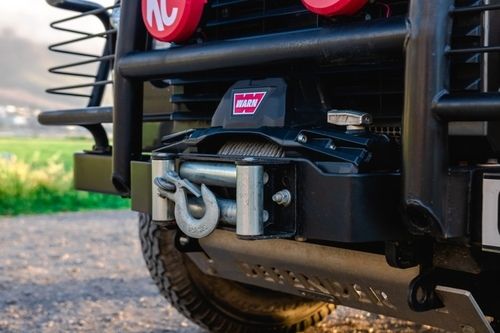
Winch and Tree Strap: Winches offer a self-recovery option, especially useful for solo overland trips. A tree protector strap allows safe anchoring to natural features without causing damage.
Traction Boards with Mounts: Multiple sets allow leapfrogging over long bogs or dunes.
High-lift jacks: Highly versatile tools, useful for everything from changing tyres to self-recovery in difficult terrain. However, they require proper training and caution to use safely.
Related: How to navigate a hill descent
A Note on Safe Use
Recovery can be dangerous if done incorrectly. Always attach to rated points, maintain a clear area around the recovery zone, and understand your equipment’s limits. If unsure, practice in a controlled setting or join an off-road recovery course.
Having recovery gear is only one part of the equation—knowing how and when to use it is what makes the difference. So once you buy the equipment, learn how to use it. Beyond safety, the right gear allows one to explore with greater responsibility and confidence.